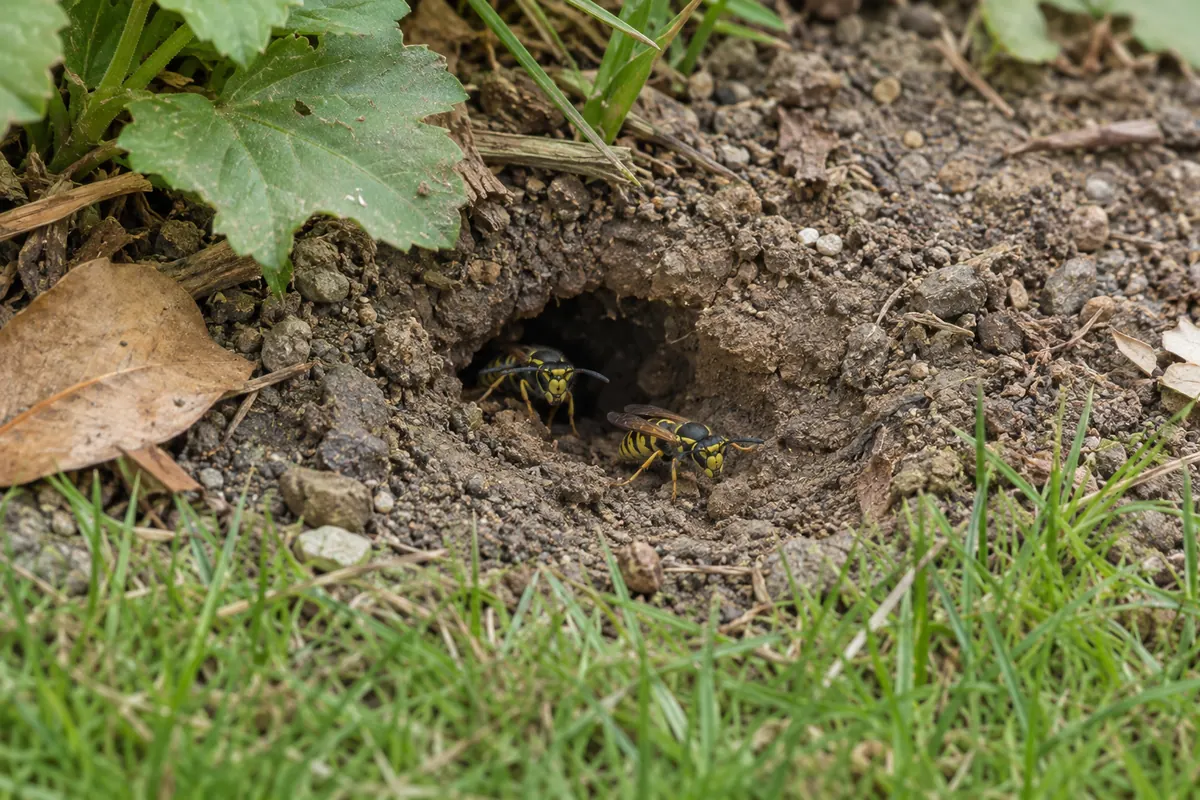
Clues worth describing from a distance
Repeated arrivals and departures at one ground opening are more useful than a few insects visiting flowers. Note the entrance relative to a fixed landmark, such as the edge of a path. Avoid placing a marker beside the opening or stepping over it to get a better view.
Not every ground-nesting insect is a yellow jacket. Species identification matters, especially when several small holes or flower-visiting bees are involved. Select “Not sure” on the quote form if you cannot identify the insect.
Pause work that disturbs the area
Keep the mower, string trimmer and garden tools away from the suspected entrance. Move games and pet activity elsewhere. Use a different route if the opening is beside a path.
- Do not dig, stamp on or fill the opening
- Do not pour fuel, boiling water or household chemicals into it
- Explain the location to a gardener before their next visit
Assessment and quote questions
Tell us whether the entrance is in open soil, beneath a root, beside paving or under a retaining feature. Mention irrigation, nearby play equipment and restrictions on reaching the yard. Those details help separate pest assessment from landscaping or structural work.
Ask what the proposed treatment involves, what preparation is needed and when the area can be used again. Excavating the nest is not an automatic part of every ground-nest job. Clarify whether any physical removal or reinstatement is included.
What to watch for afterwards
Use the observation and follow-up instructions supplied for your property. Do not reopen or cover the entrance on your own schedule. If activity continues, describe whether insects still use the original hole or another nearby opening.
After inactivity is confirmed, discuss any repair to the lawn or existing cavity. Keep food waste contained and review sheltered spaces during routine maintenance, but do not expect landscaping changes to prevent every future wasp nest.
Request help in Toronto and nearby service areas
Wasp Nest Removal accepts enquiries in Toronto, Mississauga, Oakville, Scarborough, Etobicoke, North York, Markham, Richmond Hill and Vaughan. Call (647) 264-1706 daily, 9:00 AM–5:00 PM Toronto time, or use the quote form.
Include your service area, the affected structure, approximate height and any access restrictions. Select “Not sure” if the insect is unclear. We offer free quotes; the proposed scope and scheduling depend on the actual situation.
Have a situation like this?
Request Your Free QuoteGeneral information helps you describe a problem; it does not replace an assessment of the actual insect and site.
Good to know.
01Does one hole mean one nest?
The visible opening does not establish the underground layout or rule out other entrances. Describe each observed flight path without investigating the cavity.
02Can I mow the rest of the lawn?
Keep well away from the active area and avoid crossing its flight path. Ask for advice specific to the entrance location before restarting nearby work.
03Are all ground bees dangerous wasps?
No. Ground-nesting bees and solitary wasps can be mistaken for social wasps. Identification and proximity to people guide the next step.
Still have a question? Call to discuss your nest.
Call (647) 264-1706Daily, 9:00 AM–5:00 PMOr request a free quote