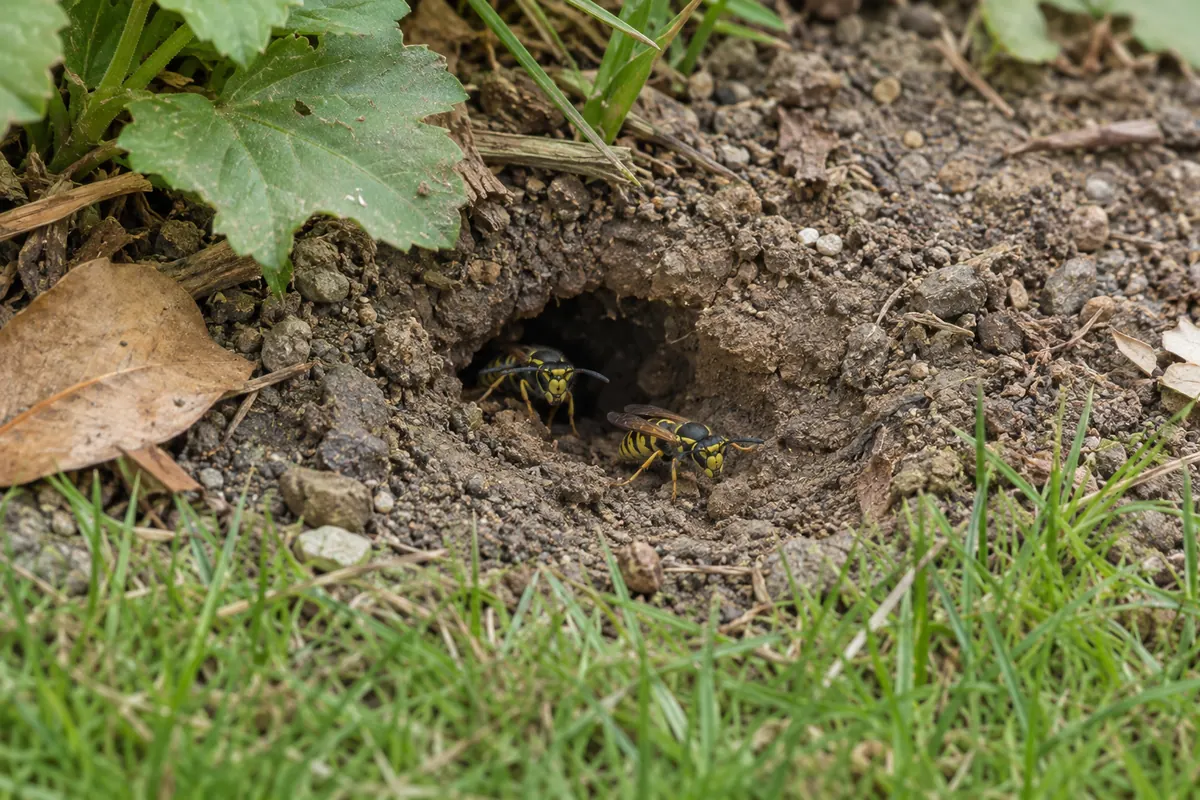
Foraging insects or a nearby colony?
Yellow jackets have compact bodies, narrow waists and bold yellow-and-black markings. They can gather around food and sweet drinks, particularly later in the season. A few visitors do not, by themselves, tell you where a nest is located.
Repeated arrivals and departures at one opening are more useful evidence. Describe that location without blocking it or putting your face near it. Our yellow jacket identification guide explains the clues in more detail.
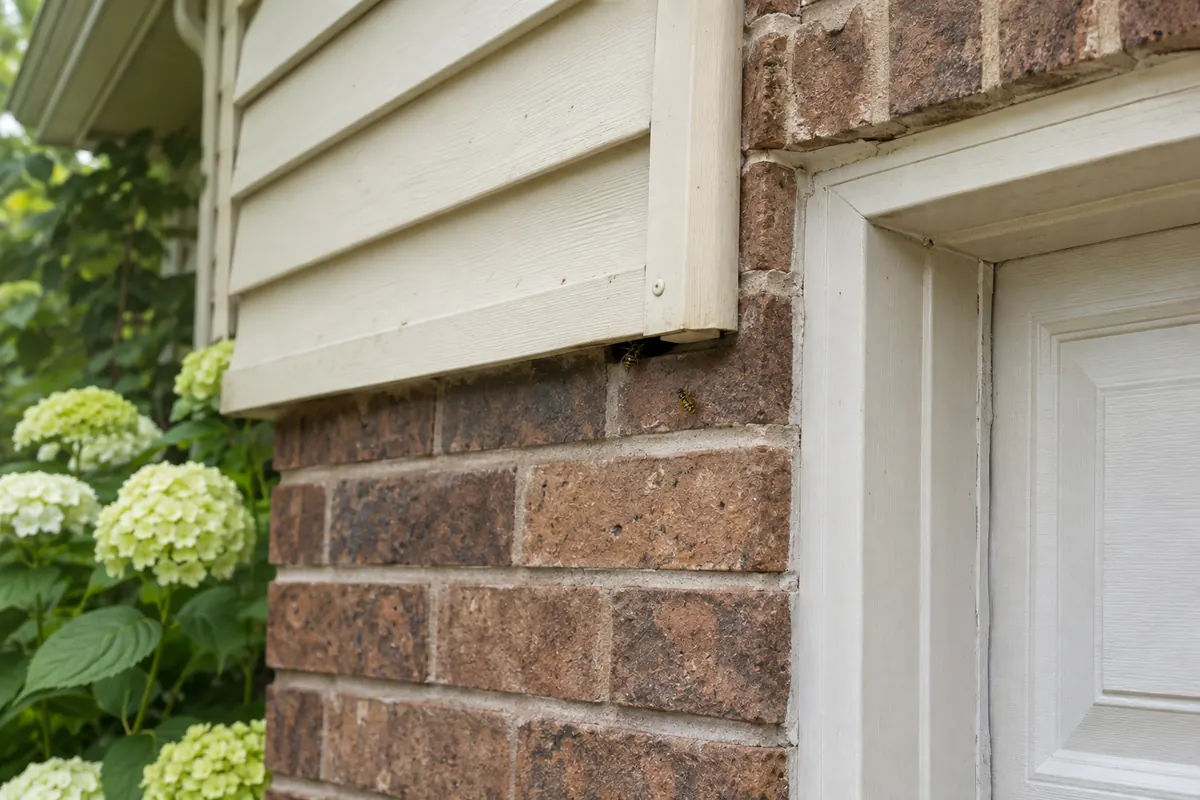
Ground nests and hidden wall activity
Some yellow jackets nest underground, using existing cavities. Others use building voids or sheltered spaces. A small entrance can serve a colony that extends well beyond what is visible.
- A steady flight path into soil near a lawn or garden bed
- Insects entering a gap at a soffit, siding or masonry
- Activity close to a deck, shed or retaining structure
- Repeated indoor sightings that may warrant investigation of a building entry
Why the entrance matters
Treating individual insects at a patio does not necessarily address the colony. A professional assessment focuses on the nest location and access, identifies the insect and considers how nearby rooms or outdoor spaces are used.
Do not fill a ground entrance or seal an active opening in a wall. Obstructing a flight path can make activity harder to assess and may redirect insects. Cutting into a wall is not a routine assumption: any proposed access and separate repair work should be discussed first.
What to expect from the quote
Tell us whether the nest is visible, whether insects are getting indoors, and if the entrance is close to a door, path or play area. Ground-level access and concealed nests can require different work.
The proposed approach, any preparation, and instructions after treatment should be explained for the actual location. Do not assume immediate physical removal of a hidden nest or a guaranteed time for all activity to stop.
Have a situation like this?
Request Your Free QuoteGood to know.
01I see yellow jackets by the bins. Do I have a nest?
Not necessarily. They may be looking for food. A repeated flight path to a particular opening is a stronger clue. Keep lids closed and describe the activity when requesting advice.
02Can I keep mowing near a ground entrance?
Keep clear of the entrance and avoid disturbing the area while arranging an assessment. Vibration and contact close to a colony can provoke defensive behaviour.
03Will the nest need to be dug out?
Not every ground-nest situation calls for excavation. The location, activity and proposed treatment determine the scope; ask what is included before work begins.
04Are yellow jackets and hornets the same?
Both are social wasps, but common names overlap. Correct identification helps guide the response. Our guides explain the differences without requiring you to handle an insect.
Still have a question? Call to discuss your nest.
Call (647) 264-1706Daily, 9:00 AM–5:00 PMOr request a free quote