1. Share the situation
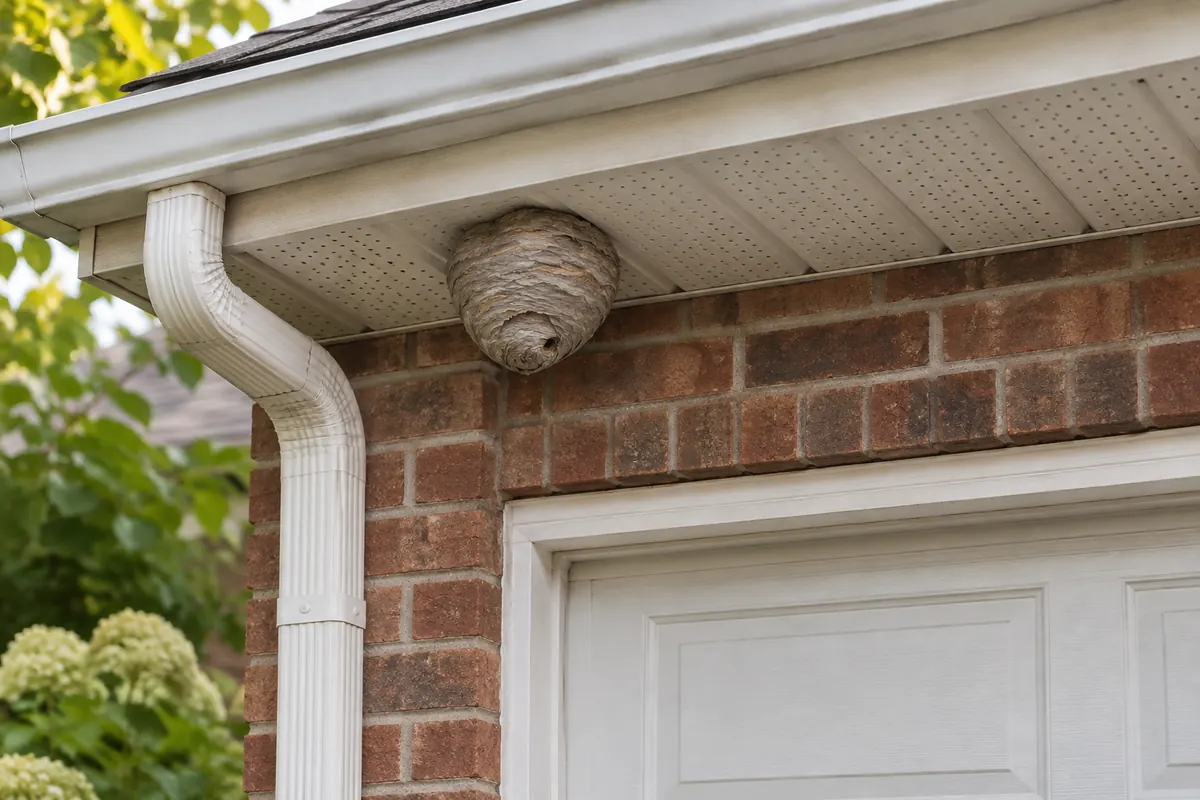
Start with your service area, a description of the insect if known, and where the activity is occurring. Is the nest exposed, or are insects entering a gap? Is it close to a door, a path or an occupied room?
Give an approximate height from a safe position. Tell us about locked gates, shared property or building-manager approval. Do not climb, open a cavity or disturb the nest to provide more detail.
2. Establish the scope and quote
Identification, access and nest location affect the appropriate approach. A visible nest at ground level is a different situation from activity behind an upper-storey soffit. Some details may need an on-site assessment.
Ask which work is included, whether physical nest removal is feasible, and whether any separate repair or building-access work is needed. Our free quote offer does not mean a price can always be finalized from a brief description.
3. Follow the preparation instructions
Keep people and pets away from the affected area. Any additional preparation should be specific to the work proposed and the products or methods involved.
Do not use your own treatment before or alongside the planned work without discussing it. If the property is shared, coordinate access and communication with the person who manages it.
4. Understand treatment and removal
Treatment addresses the active colony; physical removal addresses nest material where it can appropriately be reached. They are not always the same step. A hidden nest may not be physically removable without structural access.
Do not assume a particular pesticide, universal safety claim or instant end to all activity. The actual approach and any restrictions must be explained for your situation.
5. Clarify aftercare and follow-up
Ask when the area can be used, what activity to expect and when to contact the provider again. Follow any site-specific instructions. The appropriate monitoring period depends on the work performed.
Once the issue has been addressed, discuss suitable repairs or exclusion measures where relevant. Do not seal an active entrance prematurely. We do not advertise a warranty or guaranteed outcome without confirmed terms.
General information helps you describe a problem; it does not replace an assessment of the actual insect and site.
Good to know.
01How long does a visit take?
The time varies with access, identification and the proposed work. Ask for an estimate when the scope is confirmed rather than assuming a fixed visit duration.
02Must every nest be physically removed?
No. Feasibility depends on its location and access. Clarify the difference between treating an active colony and removing the nest material.
03Do I need to leave the property?
Any restrictions must be based on the actual work and instructions provided. Ask before the appointment; the website cannot establish a universal rule for every treatment.