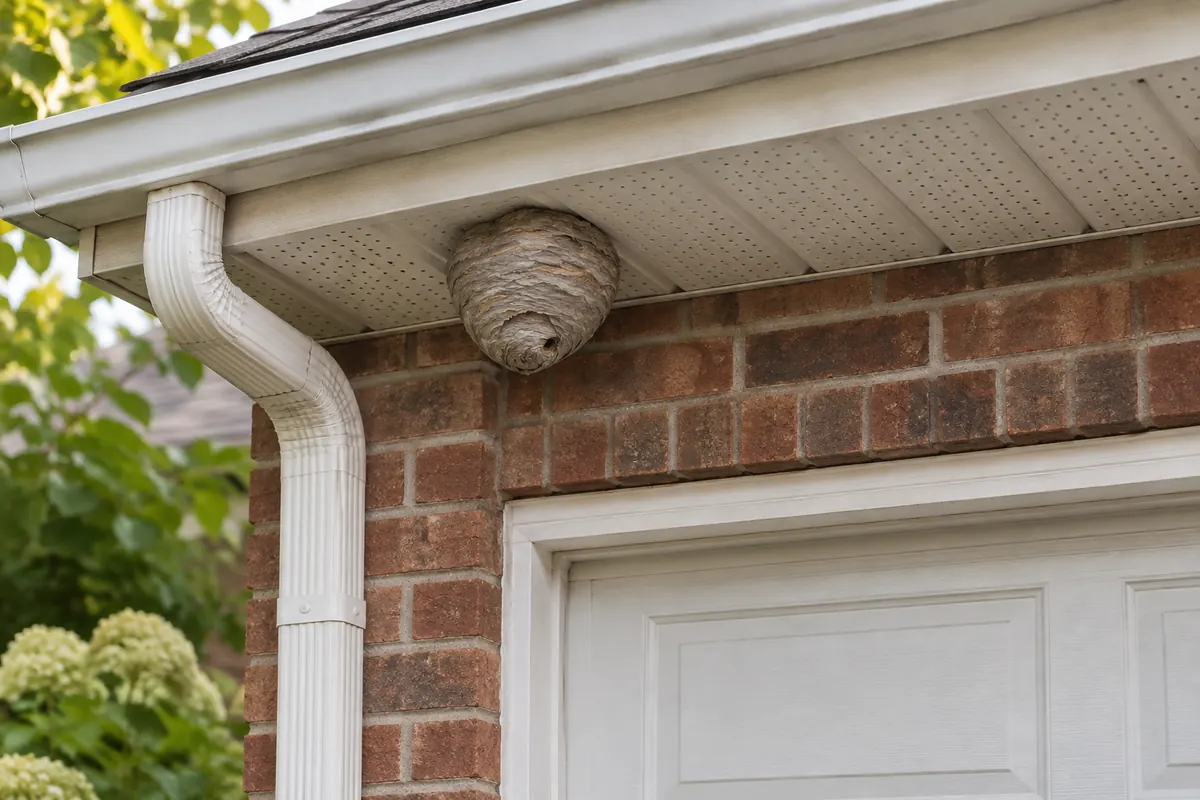
Visible nest or hidden entrance?
A papery comb attached beneath an overhang is an exposed nest. A steady stream entering a narrow soffit gap may lead into a concealed space. Seeing insects at the roofline does not tell you exactly where the colony sits.
Describe the shape of anything visible and whether activity follows one opening. You do not need to identify the species or climb for a closer look. A photograph is optional and useful only if you can take it from an already safe position.
What to do around doors, windows and walkways
Use another entrance if the flight path crosses your doorway. Keep people and pets away from the area below the activity. Do not lean out of an upstairs window, stand on outdoor furniture or use a ladder to inspect the eave.
- Pause gutter cleaning and exterior painting near the nest
- Tell household members which entrance to avoid
- Leave the active gap open until it has been assessed
How height changes the removal plan
Give the storey, roof shape and approximate location relative to a window or door. Mention a sloped driveway, narrow side passage, overhead wires or landscaping below. These details help clarify access; they do not establish that a high nest can be reached safely.
Ask whether the proposed scope includes treatment, physical nest removal, or both. Removing a visible nest and gaining access behind a soffit are different tasks. Any opening of panels and subsequent repair should be discussed before work begins.
Aftercare and exterior maintenance
Follow the instructions given for the actual work before using the immediate area or arranging repairs. Report continuing traffic to the same gap, rather than assuming a nest is inactive because activity slowed during one observation.
Once inactivity is confirmed, discuss repairing damaged soffit material or screening suitable openings with the appropriate contractor. Keep required roof ventilation functional. No repair should be used to trap an active colony inside a building.
Request help in Toronto and nearby service areas
Wasp Nest Removal accepts enquiries in Toronto, Mississauga, Oakville, Scarborough, Etobicoke, North York, Markham, Richmond Hill and Vaughan. Call (647) 264-1706 daily, 9:00 AM–5:00 PM Toronto time, or use the quote form.
Include your service area, the affected structure, approximate height and any access restrictions. Select “Not sure” if the insect is unclear. We offer free quotes; the proposed scope and scheduling depend on the actual situation.
Have a situation like this?
Request Your Free QuoteGeneral information helps you describe a problem; it does not replace an assessment of the actual insect and site.
Good to know.
01Can you tell from ground level whether the nest is inside the soffit?
The traffic pattern can identify a suspected entrance, but it may not reveal the nest itself. An assessment may be needed to confirm the location and feasible access.
02Will you remove the soffit panels?
Panel removal is not assumed. Ask whether structural access is necessary, who would carry it out and whether repairs are separate from pest work.
03Is a second-storey nest more expensive?
Height and equipment access can change the scope. Provide the storey and obstacles when requesting a free quote; a fixed price is not advertised here.
Still have a question? Call to discuss your nest.
Call (647) 264-1706Daily, 9:00 AM–5:00 PMOr request a free quote